
Abstract
This lecture explains why the African Union (AU)’s 2025 reparations agenda produced limited initial substantive outcomes despite its symbolic salience and apparent normative clarity. It argues that the reparations agenda was successful in fostering internal debates and global multilateralization, but remained a ‘difficult conversation’ left largely unspoken in AU-EU relations. Drawing on negotiation theory, diplomacy studies, transitional justice, and organisational sociology, the presenters demonstrate how clashes of meta-narratives combining contests over historical facts, feelings, and identity threats encouraged avoidance, silence, and low-cost consensus on both sides. The talk innovatively applies a seminal theory from negotiation psychology to the discursive institutionalist analysis of multilateral diplomacy. Empirically, it analyses the AU’s internal politics of agenda-setting and the EU’s limited engagement, arguing that contested understandings and bureaucratic incentives for short-term positions narrowed the agenda to low-cost outputs in the global multilateral system rather than providing impetus for a transformation in Europe-Africa relations.
Speakers
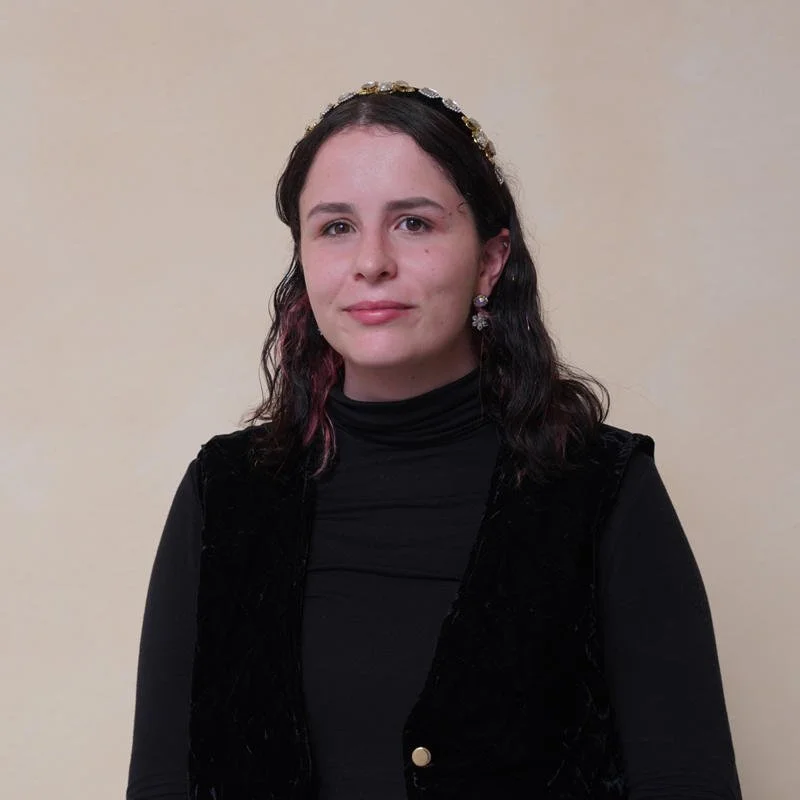
Jadé Botha is a Junior Fellow at the Centre for Advanced Studies Reflexive Globalisation and the Law, Humboldt University and a PhD Researcher at the European University Institute. Her PhD examines the epistemological foundations of African Union approaches to international justice. Her core research themes include International Criminal Law, Transitional Justice, African Philosophy and Epistemology.

Dr Karoline Eickhoff is a researcher in the ‘Megatrends Africa’ research and advisory project at the German Institute for International and Security Affairs (SWP) in Berlin. Her work focuses on global power shifts and their impact on Africa’s international relations and public discourse, particularly in East Africa. Previously, she worked as a coordinator and researcher in the field of peace mediation and mediation support, with a focus on trust-building in conflict-affected societies. Before that, she provided advice on governance in areas of limited statehood and security sector reform interventions at the German Federal Foreign Office and worked on development cooperation projects in South Sudan and Pakistan.

Dr Ueli Staeger is Assistant Professor of International Relations at the University of Amsterdam. He studies African security and international organisations, EU-Africa relations, and small states’ peace policies. A specialist of African Union funding, reforms, and geopolitics, Staeger has studied the organisation’s evolving partnerships in combining critical and policy-relevant frames. Staeger is affiliated with the United Nations University, Institute on Comparative Regional Integration Studies, the Global Governance Centre at the Geneva Graduate Institute and the think-tank ECDPM. In addition to academic teaching, Staeger regularly lectures in diplomatic training academies.
Details
Date : Tuesday, 1 December 2026
Time : TBD
Place: TBD
Registration: TBA
The REPAIR lectures
The REPAIR lectures are an interdisciplinary lecture series on contemporary reparations demands and policies around the globe. They are given by leading reparations experts and investigate how reparations claims and policies come about, how they play out from a political, economic and moral perspective, and what they may teach us about politics and economics today. The lectures are hosted by the REPAIR project, based at the Anthropology Department of the University of Amsterdam (UvA). They are co-sponsored by the UvA’s Amsterdam Centre for Conflict Studies (ACCS).