
About the Speakers
Prof. Margaretha Wewerinke-Singh
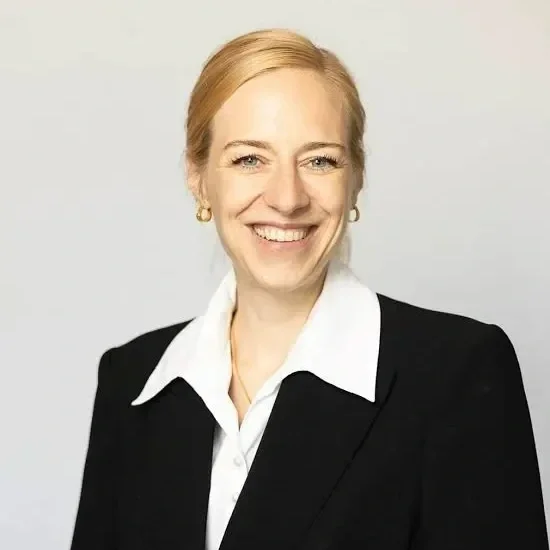
Margaretha Wewerinke-Singh is an Associate Professor of Sustainability Law at the University of Amsterdam and co-founder of SEVEN, the university’s climate institute. She is also an Adjunct Professor of Law at the University of Fiji and a Member of the Permanent Court of Arbitration in The Hague. Margaretha’s research focuses on law and sustainable transition, specifically on human rights and social justice. In her research builds on two decades of involvement in international climate negotiations: She has advised and represented governments, NGOs, international organisations and UN agencies.
Margaretha currently serves on the Human Rights Committee of the Netherlands Advisory Council on International Affairs (AIV) and advises the Office of the Prosecutor of the International Criminal Court (ICC). She co-led the legal team of Vanuatu in the climate advisory proceedings before the International Court of Justice (ICJ) and the Inter-American Court of Human Rights, and represented the Organisation for African, Caribbean and Pacific States in the ICJ advisory proceedings on the right to strike. Further, she acted as counsel for the Commission of Small Island States on Climate Change and International Law in the climate advisory proceedings before the International Tribunal for the Law of the Sea.
Prof. Elisa Morgera
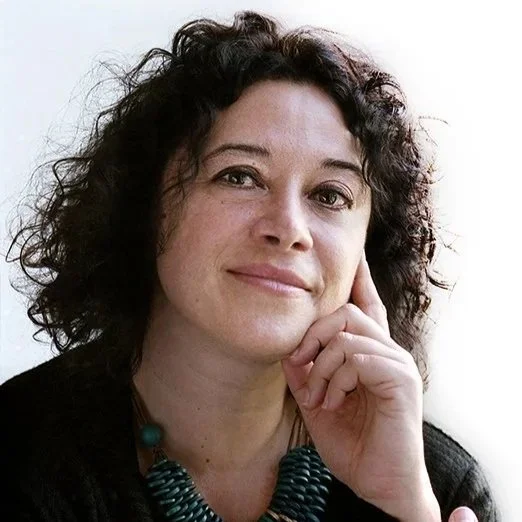
Elisa Morgera is a Professor of International Law and Sustainability at Durham University and Professor in International and European Union Environmental Law at the University of Eastern Finland. She was appointed as UN Special Rapporteur on Climate Change and Human Rights in May 2024. Previously, she worked with the UNFAO in Italy and the UNDP in Barbados; and continued to collaborate with the United Nations and other international organizations as consultant and independent expert. She advised governments and civil society in Africa, Asia, Europe, Latin America, the Caribbean, and the South Pacific.
Prof. Morgera has published extensively on human rights and the environment, the human right to science, as well as the human rights of small-scale fishers, Indigenous Peoples, and children, at the climate-biodiversity and climate-ocean nexus. She has also published on business responsibility to respect human rights, as well as on the international principle and standards of equity among and within States, based on international environmental and human rights law. From 2019 to 2024, Ms Morgera directed the One Ocean Hub, a Global North/South research collaboration on human rights and the ocean, which connected natural and social scientists, legal experts, artists, human rights holders and defenders, to support fair, inclusive and transformative decision-making.
Event description
Beyond Loss and Damage: Climate Reparations in International Law
11.00 - 11.30
As climate impacts intensify, demands for reparations are gaining traction across diplomacy, litigation, and social movements. Yet the legal meaning of climate reparations remains contested. This lecture by Prof. Wewerinke-Singh explores how claims for climate reparations relate to, but also exceed, the language of loss and damage under the UN climate regime. Drawing on the law of State responsibility, international human rights law, and the recent advisory proceedings before the International Tribunal for the Law of the Sea, the Inter-American Court of Human Rights, and the International Court of Justice, it argues that climate reparations are best understood as part of a broader effort to articulate the legal consequences of conduct that has contributed to profound and uneven climate harm. Particular attention will be paid to the role of Small Island Developing States in advancing these arguments, and to what it would mean to take seriously remedies such as restitution, compensation, rehabilitation, satisfaction, and guarantees of non-repetition in the climate context. In doing so, the lecture reflects on both the promise and the limits of international law as a site for reparative climate justice.
Reparations for Climate Harm: International Human Rights Law and Transformative Change Perspectives
11.30 - 12.00
The presentation by Prof. Morgera will reflect on the human right to effective remedies for climate harm. It discusses the opportunities that remedies and reparations can provide to reclaim spaces and resources for socio-cultural and environmental rehabilitation, inter-generational alliances and the re-imagination of our economies. It explores the transformative potential of reparations to support the agency and effective protection of the human rights of those most affected by climate change, while contributing to international solidarity and a safer climate for humankind.
Audience Q&A
12.00 - 12.30
The presentations will be followed by a 30-minute audience Q&A.
Details
Date: Wednesday, 15 April 2026, Time: 11am CET
The REPAIR lectures
The REPAIR lectures are an interdisciplinary lecture series on contemporary reparations demands and policies around the globe. They are given by leading reparations experts and investigate how reparations claims and policies come about, how they play out from a political, economic and moral perspective, and what they may teach us about politics and economics today. The lectures are hosted by the REPAIR project, based at the Anthropology Department of the University of Amsterdam (UvA). They are co-sponsored by the UvA’s Amsterdam Centre for Conflict Studies (ACCS).