
Why Climate Repair must be here and now: Fieldnotes from the Yasawas
From the shore, the Yasawa Islands appear ethereal: turquoise waters, music carried by the wind, and lives woven around the sea. Yet when one gets closer and stays longer, it feels like an oasis. Beneath this beauty, the shoreline is quietly disappearing. Sea walls are rising as the ocean advances, dams are drying as water becomes scarce and creeks widen into the land. For iTaukei communities in Fiji’s Yasawas, climate change is a tangible-felt reality. Their homes, relationships, social systems, traditional governance and ways of life are slowly threatened by erosion. If climate repair is to mean anything, it must begin here and it must begin now.
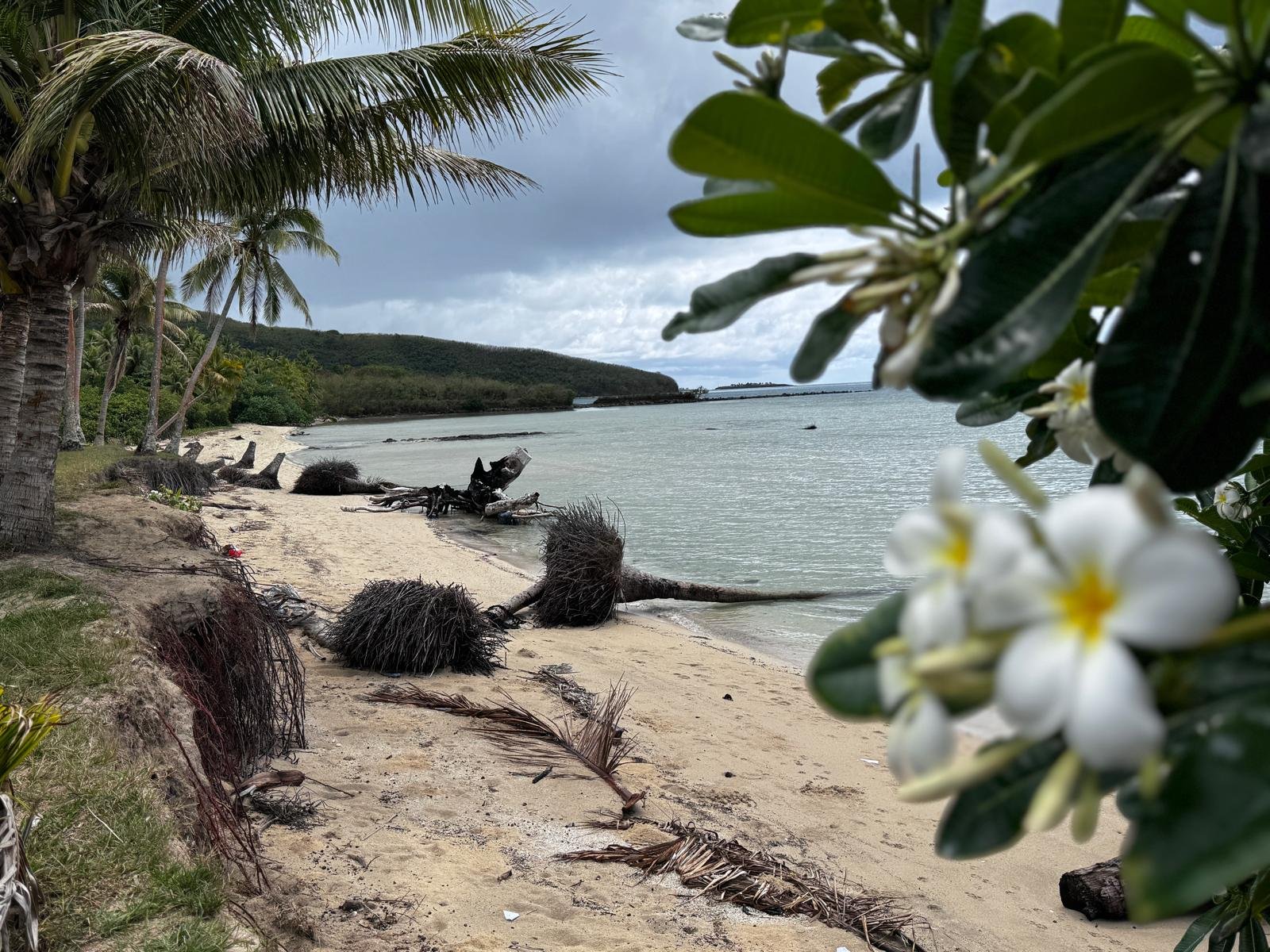
The shore of the visit being violently eroded, before the sea wall was constructed in 2026. In the background are the Firangi Pani flowers characterstic of the Yasawas. Photograph by author . November 2025
Introduction
Life looks exquisite surrounded by turquoise green and indigo blue waters from the shore here in Fiji’s Yasawa islands. The islands are by far, one of Fiji’s most popular holiday locations or so I am informed by my interlocutors. Not just (mostly male) colleagues back in the Netherlands but even colleagues in mainland Fiji stated that they were “jealous” of my fieldwork. That, I am “lucky” to work in such an “exotic, holiday” location. I was dumbstruck by the expression, especially coming from critical social scientists, and aid workers from multilateral organisations, who I suppose, are well aware of the othering capacity of the term “exotic”.
Giving the colleagues the benefit of doubt, I suppose their reference here is to the pristine waters of the Pacific where life is so “tranquil and calm” as well as fieldwork in a touristed destination such as Fiji. And to be fair, indeed the Yasawas are wonderful in many ways. Daily life in the two villages I am working with is joyous and filled with laughter, and music is everywhere including indigenous and church music. Then there is also the constant music of the winds accompanied by the interlude of the waves and the fragrance of the sea.
Yet, the spectacular beauty owing to its location in the Pacific Ocean, is exactly what can make life on the Yasawa islands eerily challenging at times, especially during the nights. The mainland is on a remote location, its shores nowhere to be seen from where the villages. This distance makes the residents even forgiving to their elected representatives for being ‘unable’ to provide fundamental necessities such as running water and electricity even as of 2026. “How will they come, we are so far away!” argue my interlocutors. Darkness is, however, not silent here. The sounds of roosters, the wind, the dogs and occasional cats, the waves and the dimming solar lamps in a few houses are its constant companions. The melodies of musical prayers are carried by the wind.
On one such evening, I was sitting idly wondering which house to visit to charge my electronic gadgets as everyone does not have sockets and solar panels here. The house of my host family is made of concrete and stands directly on the ground – a rare sight in the village where most houses are made of wood and stand on stilts. The neighbour’s house, which I can see through the fluttering curtain of my window, is a case in point. It is a stilted wooden house accommodating six family members. Stilted for letting the annual floodwaters from the rains pass through in peace, that show up during the summer months of November until April. Today, I want to share with you three water stories from my ongoing research in two villages in Naviti island, part of the Yasawa group of islands in West Fiji. These stories reiterate the reasons as to why repair must be here and now in this part of the world.
Three Stories
Story one: The sea wall
As our fiber glass boat arrived near the village on the first day of my stay, our boat’s captain who is also my host exclaimed, “you will see a few things changed this time (compared to our previous year’s stay)”. His smile grew wider as we drew closer. I realized his “change” referred to the much-coveted sea wall, a promise of nearly a decade by a government department along with a non-governmental organization to the people of this village witnessing extreme erosion of the shores from the last few decades. The wall is a form of “nature-based solution” as informed to me by an engineer of the Waterways department involved with the wall’s construction – to last for “twenty to thirty years”. To my non-expert eye, it appears to be a pile of stones stacked on top of one another along the shore; while filling the roots of the coconut trees with soil that were uprooted and near-fallen the last time we’d seen them. They were supported to stand, slanted rather than straight, but stand nonetheless by the soil that was a part of the sea wall. The beach felt a bit away from the border of the village too.
Strong winds bring in the high tidal waves onto the seawall. Video by author. July 2026
Except for the first three days, most of my stay here has been marked by a heavy and constantly blowing wind for over a week. The interlocutors do not complain, saying this is normal for the seasons, although most of them are unable to go fishing as it is “very rough out there.” Given that mobile connectivity is also quite challenging here, I have developed a habit of searching a place every day to get network and call my family from. On most days, it happens to be a particular patch of the beach. So, my morning ritual has been to wake up and make calls home since my arrival. This exercise has also made me witness the “roughness out there” first hand.
Two mornings ago, the high tidal waves had almost covered the entire shoreline. One morning ago, the winds pushed the waves to touch the ground-levels stones of the sea wall. This morning, they seemed to grow up fast, touching the mid-level of the short sea wall. The waves continued to splash onto my hands holding my phone. The ocean remained a ceaselessly spectacular turquoise green and blue of multiple shades.
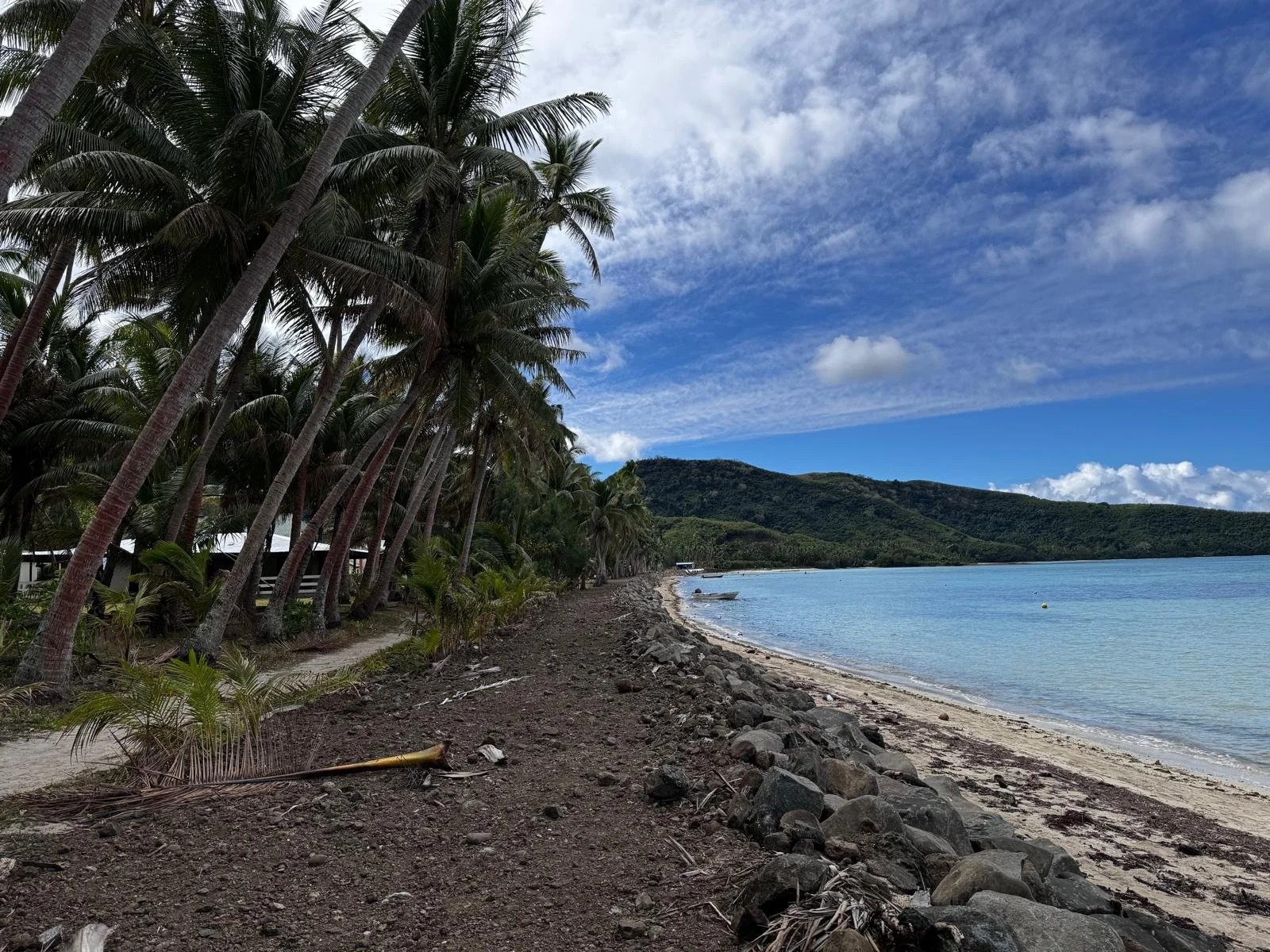
The partially complete sea wall. Photograph by author. July 2026
Story two: The drying dam
The village is surrounded by the ethereal waters of the Pacific Ocean to its east while its western side is adorned by the Vaturua (meaning the two rocks or hills) hill range. Water – that gives life to humans for drinking and daily life requirements - is becoming a scarce entity here, despite efforts by the national, provincial government and many non-government organizations. Some of the interlocutors inform that this year has been a particularly cold winter in the Yasawa islands, with minimal rains and therefore, a deep scarcity of water has come by. In this dry winter season, the village depends on two forms of water sources: first, on rainwater as drinking water – collected through roof harvesting and storing in community tanks between a few families installed by foreign and local aid organisations; and, second, on rainwater keeping a pond on the top of the Vaturuwa mountain that functions as a dam, supplying water for washing, agriculture and other uses.
Although dry winters are expected to bring lesser rainfall leading to water shortages, the Fiji Meteorological Services reported that Yasawa-I-rara has received above average raifall in June 2026 while it was expected to receive “suppressed” or “below normal rainfall” (2:48 – 2:54minutes, FMS, Official Facebook page) from July until September this year. This is likely caused by a strong El Niño event that is underway and strengthening across the tropical Pacific Ocean. El Niño periods in Fiji are traditionally linked to below-normal rainfall and an increased risk of dry spells or drought during the dry season.
The obvious result of the water shortage in both water sources in the village is the lack of drinking water and very economic use of water for cleaning and washing, leading to a lack of hygiene for the residents of the village; and numerous skin diseases for children that continue throughout all the seasons.
Story three: The Widening Creeks
The Pacific Ocean, as I am coming to learn of it, is not a shy or a timid one. It enters the lives of the residents here, metaphorically and literally – freely and unabashedly. I share this through the story of two ever-widening creeks in the villages. A few nights ago, I was visiting one of the villages that had hosted me the previous year. A teacher from the local school had kindly offered to accompany me on the walk of about just twenty minutes. By the time our evening tea sessions were complete, it was about 6:30pm. This village was better equipped with solar lamps that function throughout the night. So, the night didn’t feel as dark here. With a lunch invitation for the following Sunday in hand, we bid our sota taale (see you again in Yasawan dialect) and resumed our return journey. Then what began felt like a forever journey.
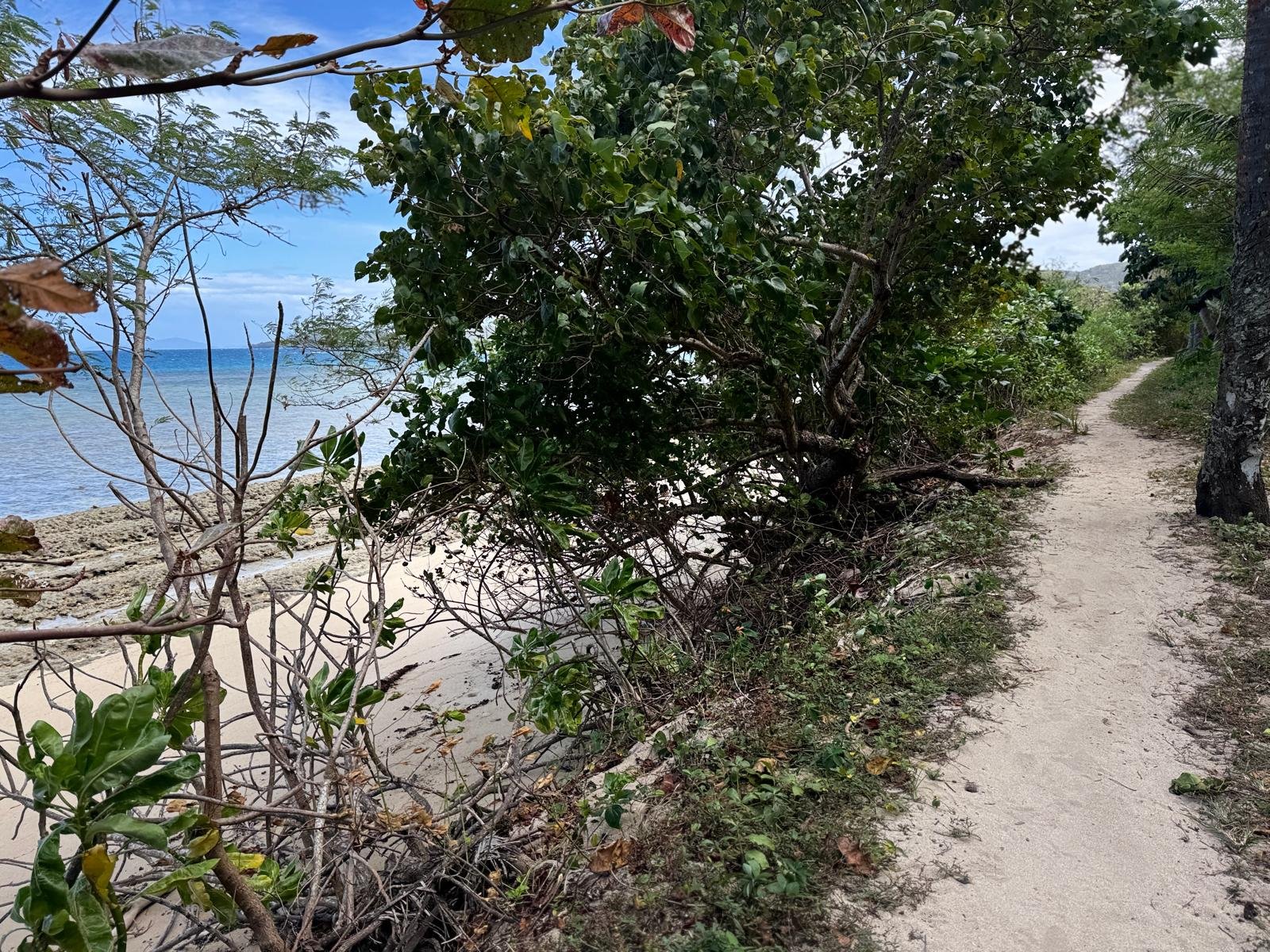
The pathway along the shore between the two villages. Photograph by author. July 2026
The schoolteacher, my co-traveler, is a mainlander from the Ba province who has lived in the island for almost a decade. She seemed like a seasoned traveler of the Yasawa night. The twenty-minute walk along the shore is marked by three graveyards, a thick patch of wild growth of plants and an array of abandoned houses whose owners have either passed away or left the concrete houses after they showed cracks through the walls due to the sandy land. It was also filled with two creeks at the start and end of the journey – water piercing through and into the land from the ocean.
One of the creeks was formed in a short time during our visit, thanks to the high tides, and took my co-traveler by surprise. She, being the kind host that people here are, offered to see the depth of the creek first and the safety for me to cross it. Albeit with challenge of carrying the torches and bags in our hands, we crossed the creek with nearly knee-deep water. The thick patch gave way to a rocky patch where the waves were adamantly determined to kiss our feet. Nearing the village, we realized that the tiny creek we’d seen while leaving our village turned into a wide one if not a deep creek.
The wide creek, the forthcoming ocean, the sounds of the waves and the dark night welcomed us back into the village.
Conclusion
The joys of traditional Fijian ways of living, music, laughter, and the sheer beauty of the pristine waters are what define the Yasawas. Yet, what remains embossed of this experience within the outsider-researcher like me is the slow yet constant erosion of the shoreline of the two villages. That and the possible eroding away of a way of life for the iTaukei (indigenous) coastal people of this village - who do not want to be moved away from here or relocated to the mainland, despite the many precarities of life.
23rd July 2026 marked the first anniversary of the International Court of Justice’s landmark Advisory Opinion on Climate Responsibilities of the state. All residents in the Yasawa islands, like the village I am currently in, may not be accustomed to the call for and multiple ways of claiming legal reparations for climate change. They, however, are bearing every brunt and all forms of climate harms – scanty and erratic rainfall and extreme seasons, an eroding shoreline and a rising and incoming ocean – for which repair is a must. How to reach this repair, in the legal form i.e. who is responsible for the anthropogenic climate actions leading to slow catastrophes and their intergenerational effects, and how they must be held accountable have already been shown to the world one year ago by the ICJ – so why the delay in climate actions and climate reparations?
Mece music rehearsal in the village. Video by author. 2026
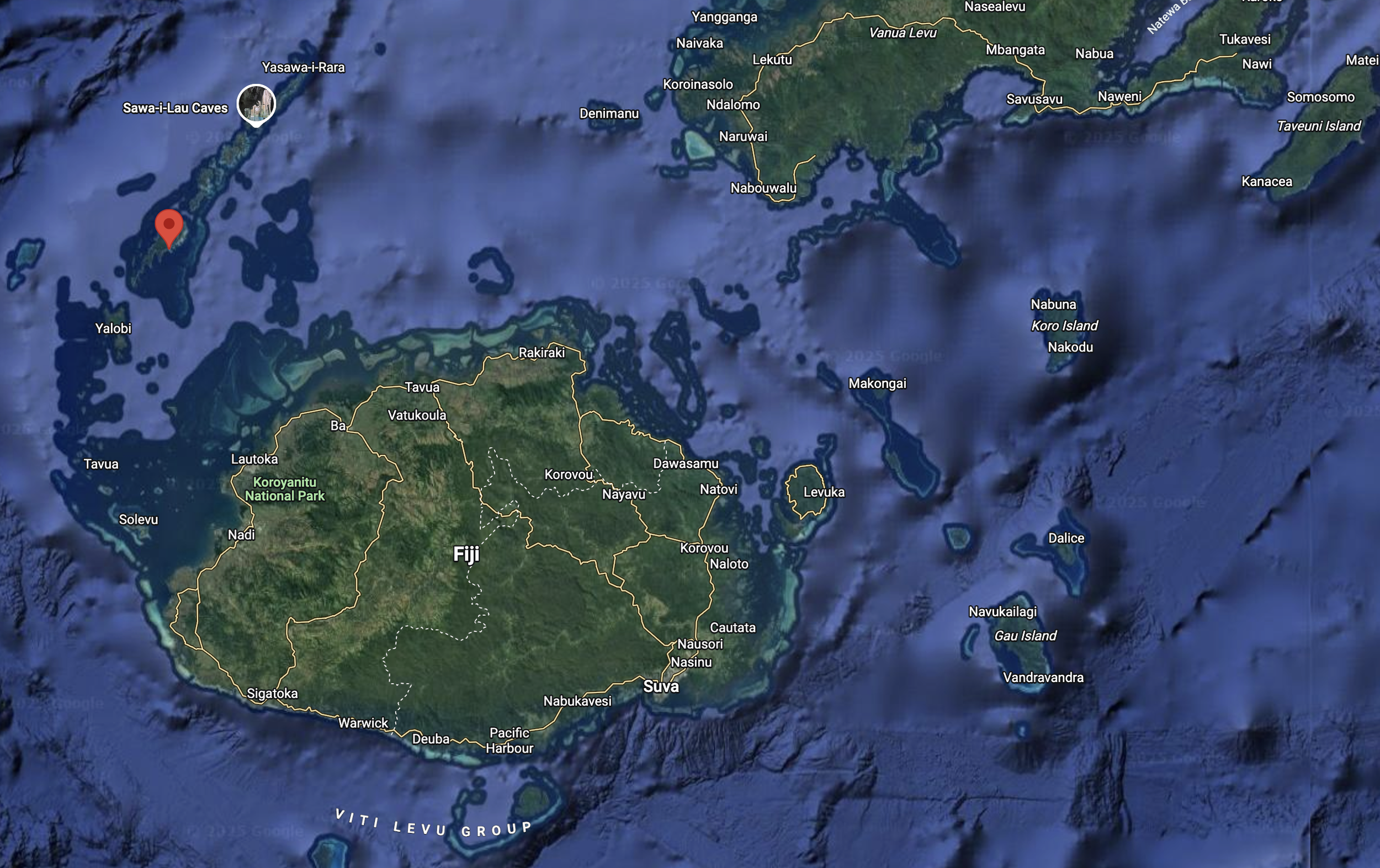
Naviti Island of the Yasawa Group of Islands. West Fiji.
Acknowledgements
Thank you to the interlocutors and residents of Marou and Malevu villages for sharing their lives and stories with me, and permitting me to share them with the “people in my world”. I would like to thank Felix Stein for helpful edits. A special thank you to Mayank for pushing me to write this down in the traditional form – with a pen on paper, and input.
About the Author
Dr. Mausumi Moran Chetia is the postdoctoral researcher of the project Reparations and Global Development Project (REPAIR). She writes on climate-related disasters, (im)mobilities and displacements.